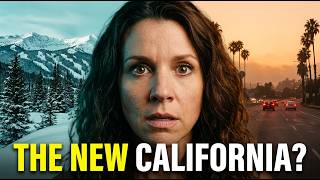
Is Colorado Becoming the New California? A Deep Dive into Growth and Challenges
Is Colorado Becoming the New California? A Deep Dive into Growth and Challenges
Colorado has long been celebrated as a tranquil haven in the Rocky Mountains, a hidden gem offering unparalleled outdoor adventures and a laid-back lifestyle. However, in recent years, a growing concern has emerged among its residents: Is Colorado losing its unique identity and transforming into"the new California"?
This question, often met with both excitement and trepidation, reflects anxieties about skyrocketing home prices, relentless population growth, increased traffic congestion, and a rising cost of living. Many long-time Coloradans are observing shifts that echo the experiences of the Golden State, prompting urgent conversations about the future of their beloved home.
While the parallels are becoming more apparent, it's crucial to acknowledge where Colorado still maintains its distinct character. Let's delve into the key areas of concern and compare them to California's reality, understanding that while changes are undeniable, Colorado remains very much its own place.
The Real Estate Rollercoaster: Housing Prices in Perspective
One of the most talked-about changes in Colorado is the dramatic surge in housing prices over the last decade. If you invested in a home here 10 or 15 years ago, you've likely seen significant appreciation. Cities like Denver, Fort Collins, Boulder, and Colorado Springs have all witnessed substantial growth in home values.
This demand is largely fueled by Colorado's consistent ranking as one of the top states for inbound migration. The allure of an outdoor lifestyle, a robust job market, and an attractive quality of life have drawn countless new residents. However, when demand outpaces housing supply, prices inevitably climb – a basic economic principle at play.
"One of the most noticeable changes in Colorado over the past decade has been the rapid rise in home prices. If you bought a home here 10 or 15 years ago, chances are it has appreciated significantly."
While the influx of people has somewhat slowed recently, housing prices in many areas remain at a premium. For those relocating from even more expensive regions like California, Chicago, or New York, Colorado's housing, despite its increase, can still appear more affordable. Average home prices in Colorado, particularly outside major metro areas, hover around $500,000 to $600,000. This is considerably lower than the figures seen in major California markets such as San Francisco, San Jose, or Los Angeles.
Moreover, California's coastal cities face severe geographical and developmental constraints. Colorado, by contrast, possesses more available land for expansion and new housing, offering greater room for geographical growth. So, while prices have indeed risen, Colorado's housing market is still a distinct entity from California's.
Unpacking Population Growth: Scale and Density
Colorado has been one of the fastest-growing states in the nation for years, attracting residents from across the U.S., with California being a significant contributor. This migration is driven by several factors:
Lifestyle:Colorado offers unrivaled access to mountains, hiking, skiing, biking, and a vibrant outdoor recreation scene.
Economy:Denver and Boulder have emerged as thriving hubs for technology, aerospace, startups, and renewable energy.
Quality of Life:Many seek a balance between career opportunities and an active outdoor lifestyle.
However, rapid population growth brings its own set of challenges: increased demand for housing, more vehicles on the roads, and added pressure on infrastructure and local services. Yet, when comparing sheer scale, Colorado's population of approximately 6 million pales in comparison to California's nearly 40 million residents.
"Even with this growth, Colorado's population is still relatively small compared to California with nearly 40 million residents in California and only 6 million in Colorado. That means that Colorado still has far less overall density and crowding compared to California's major metro areas."
This significant difference implies that Colorado still enjoys far less overall density and crowding compared to California's major metropolitan areas. While more people are indeed moving here, Colorado is nowhere near the same scale as California.
Navigating Congestion: Traffic on the Rise
Any regular commuter on I-25, I-70, or within the Denver metro area during rush hour can attest to the worsening traffic conditions. More people translate directly to more daily commuting, increased construction, and greater strain on the existing road network. Colorado's infrastructure has struggled to keep pace with this demand, resulting in highways like I-25 and I-70 being under seemingly constant construction.
Traffic becomes particularly acute during ski season, with I-70 experiencing heavy weekend congestion as people flock to the mountains, especially on Friday evenings, Saturday mornings, and the notorious Sunday afternoon return trips.
Comparisons to California's infamous traffic, particularly in places like Los Angeles where commutes can stretch for hours, are frequently drawn. However, Colorado still has a considerable way to go before reaching such extreme levels. Most commutes in Colorado remain significantly shorter than those in major California metros. In many cities, it's still possible to traverse town in 20 to 30 minutes outside of peak rush hour. Even within the Denver metro area, traffic patterns and overall congestion are generally more manageable than in California's largest urban regions. So, while traffic is undeniably increasing, Colorado is not yet grappling with California's extreme gridlock.
The Cost of Living: Beyond Housing
The cost of living encompasses much more than just real estate; it includes groceries, insurance, utilities, childcare, healthcare, and taxes. Colorado's cost of living has steadily climbed over the past decade, especially in front-range cities. Dining out, entertainment, and everyday services have all become more expensive.
This partially stems from economic growth; as incomes rise and demand increases, prices often follow suit. Yet, a direct comparison to California still reveals a significant gap. California consistently ranks as one of the most expensive states across nearly every category.
"So while living in Colorado is certainly more expensive than it used to be, it still doesn't approach the overall cost levels we see in California."
Colorado, conversely, tends to fall closer to the middle to upper range nationally. Utilities, everyday goods, and taxes are generally less expensive than what most people experience in California. Therefore, while living in Colorado is certainly pricier than it once was, it has not yet reached the overall cost levels seen in California.
Preserving Identity: Culture and Lifestyle
A primary concern for many residents is the potential shift in Colorado's culture. Known for its laid-back nature, strong outdoor culture, and tight-knit communities, even within larger cities, there's a fear that increased migration, particularly from other states, could alter this identity. The frequent comments about the state being"full"or pleas to"don't move here"reflect a genuine worry that more development, urbanization, and national attention will inevitably change the character and feel of Colorado.
However, Colorado's culture is intrinsically linked to its geography. The mountains, public lands, ski towns, trails, and the overarching outdoor lifestyle are fundamental to what makes Colorado unique. These elements are enduring. Even as the state grows, access to nature and outdoor recreation remains a defining characteristic, continuing to shape both the lives of its residents and the types of individuals drawn to call Colorado home.
The Evolving Landscape: A Balanced Perspective
In summation, Colorado is undoubtedly evolving. Housing prices have climbed, the population has grown, traffic has worsened, and the cost of living has increased. These trends naturally lead to comparisons with California. Yet, a closer examination of the numbers and lifestyle reveals that Colorado is still far from becoming California. Its population remains smaller, housing prices are lower, traffic is lighter, costs are more manageable, and its unique culture and geography persist.
Growth inevitably brings challenges, but it also fosters dynamism and new opportunities. The pertinent question might not be whether Colorado is transforming into California, but rather how Colorado can manage its growth while diligently preserving the very qualities that make it such an exceptional place to live. This ongoing conversation will undeniably shape the state's future for decades to come.
Moving to or within Colorado?
If you're considering relocating to or within Colorado, or simply wish for a deeper understanding of what life is truly like here, feel free to reach out. We're here to provide insights and answer your questions.
Watch the Full Video
For a more comprehensive discussion and visual context, watch the complete video that inspired this blog post. Dive deeper into the nuances of Colorado's growth and its comparison to California.
▶️Watch the full video: Something Is Going Deeply Wrong in Colorado(Replace YOUR_VIDEO_ID with the actual YouTube video ID)
Don't forget tosubscribe to our channelfor more insights into life in beautiful Colorado!
